
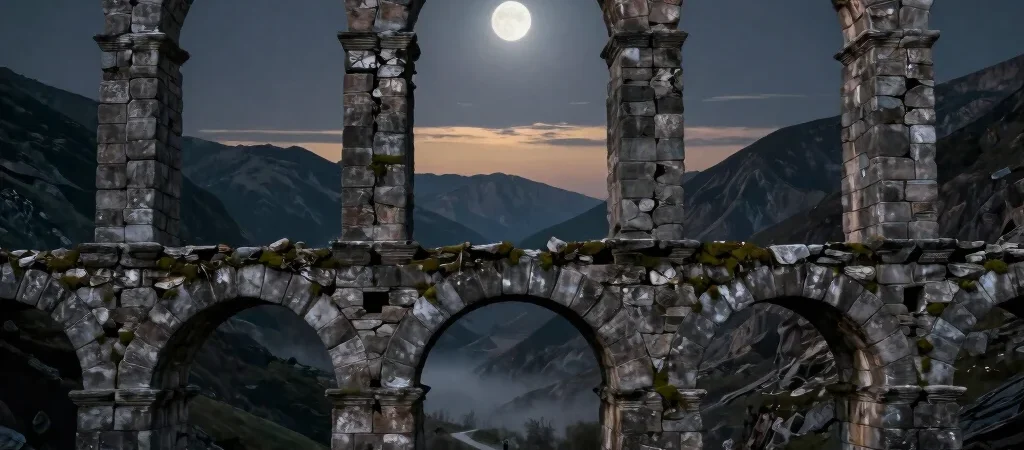
A traveler reaches a broken bridge at dusk. The stones are old, but the locals still avoid the eastern bank, and the road bends around a gate no one has repaired. That is when a ruin begins to feel like part of a world rather than a dramatic backdrop: its past still has consequences.
Give the ruin a former purpose
Start with what the place was built to do. A watchtower once signaled across a mountain pass; a canal carried grain toward a city; a shrine marked the safest crossing of a river. The surviving shape should offer clues to that purpose, even if the people living nearby no longer agree on what happened there.
Let history affect the present
The most convincing remnant changes a present-day decision. A collapsed aqueduct may leave one district short of water, while an old fort controls the only dry route through a marsh. These details turn history into pressure: characters inherit the consequences, not just the view.
Leave some answers buried
A world does not need a complete account of every fallen kingdom. Let one inscription contradict the local story, or let a repaired wall use stone from a forgotten monument. A few precise traces invite discovery while keeping the past larger than any single explanation.