
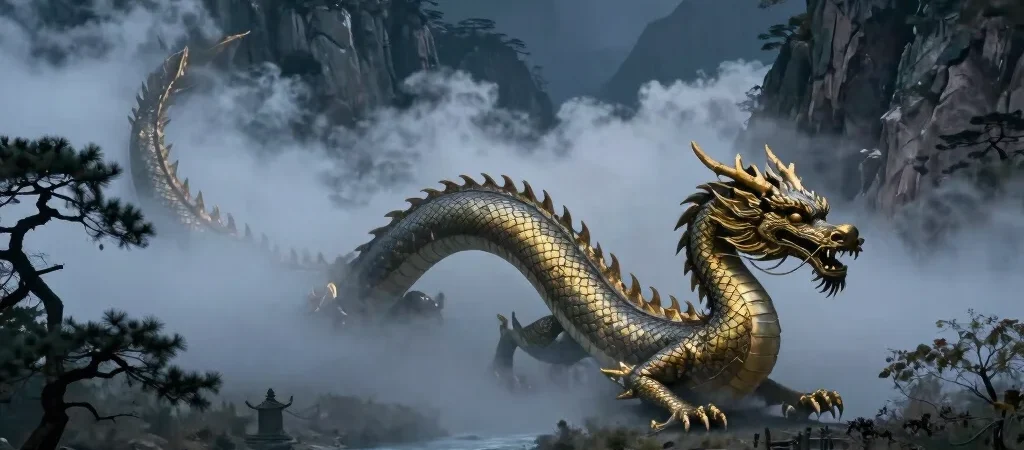
A dragon on a European map and a dragon in a Chinese procession may share a name in translation, but they do not arrive with the same purpose. One might be imagined as a dangerous opponent; another as a powerful presence tied to rain, water, or authority. The creature becomes more interesting when we follow the local story instead of searching for one universal definition.
A creature shaped by place
In many European stories, dragons occupy a threshold: a cave, a ruined tower, a guarded hoard. Their presence makes a journey dangerous and gives a hero something formidable to face. Chinese long, often translated as dragons, are associated in various traditions with water and rain, among other meanings; the image can suggest power that sustains as well as power that overwhelms.
Follow the story, not the label
These patterns are useful starting points, not rules that every tale obeys. Traditions change across regions and centuries, and a single creature can take on different roles even within a broad cultural tradition. When reading a dragon story, notice what the creature guards, what people ask of it, and what the surrounding landscape depends on.
Let difference deepen discovery
For writers and readers alike, comparison works best when it preserves those differences. Rather than borrowing a dragon’s silhouette and attaching a familiar label, begin with its place in the world: Is it feared because it brings drought, because it controls a passage, or because a community depends on its favor? The answer turns a familiar monster into a creature with a history.